
Rethinking Liquid Transport: IBC Totes Trumps Traditional Methods
Transporting liquids in bulk comes with its fair share of headaches. If you’ve relied on drums or rigid tanks, you know the struggle—limited capacity means you need more containers, cylindrical shapes waste valuable cargo space, and manual handling can slow down operations. These inefficiencies add up, increasing costs and making logistics a nightmare.
So, what’s the fix? The right container.
IBC Totes: The Smarter Alternative for Transporting Liquids
Enter Intermediate Bulk Containers (IBC totes)—the game-changer in liquid transport and storage. These containers solve many of the issues businesses face by offering:
- Larger capacity than traditional drums, reducing the number of containers needed.
- Cubic dimensions that make the most of storage and shipping space.
- Built-in pallets for easy handling with forklifts and pallet jacks.
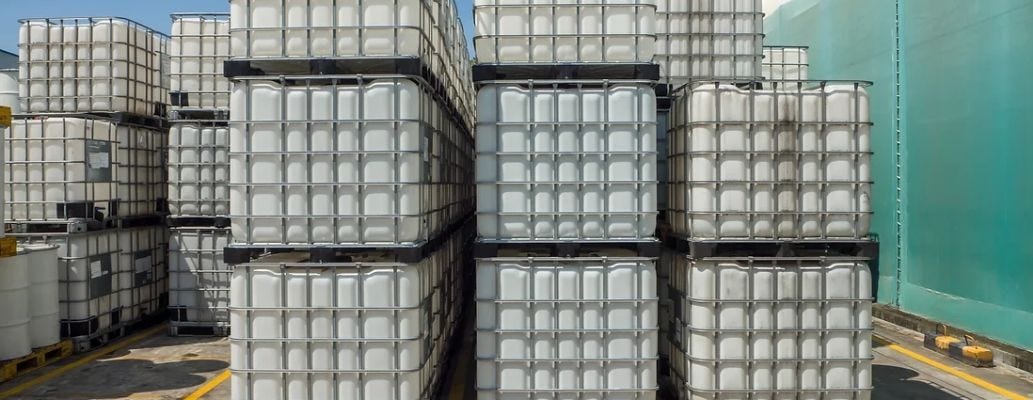
- Stackable designs to maximize warehouse and truckload efficiency.
Whether you're transporting potable water, chemicals, or food-grade liquids, IBC totes offer a practical, cost-effective, and space-saving solution. If you’d like a deeper dive into what IBC totes are and how they can be beneficial to your business, check out our comprehensive introductory guide to IBC totes, including all the different types at your disposal.
So, what exactly makes IBC totes dimensions so efficient?
Understanding IBC Tote Dimensions
When it comes to liquid transport, size matters. The dimensions of an IBC tote are carefully designed to maximize efficiency, whether you’re storing, moving, or dispensing liquids. Unlike the traditional 55-gallon drum, which is smaller and harder to handle, IBC totes streamline logistics with their higher capacity and palletized base.
Here’s what defines an IBC tote’s dimensions:
- Size (L × W × H): Determines how well it fits in transport units.
- Capacity (Gallons/Liters): Defines the total volume it can hold.
- Outlet Valve Size: Impacts the flow rate when dispensing liquids.
Standard IBC Tote Sizes
Most caged IBC totes follow a 48” × 40” base footprint, making them easy to stack and transport. The most common capacities are:
275-gallon tote: 48” (L) × 40” (W) × 46” (H)
330-gallon tote: 48” (L) × 40” (W) × 53” (H)
While the width and length stay the same, the height varies depending on capacity. This uniformity makes them a perfect fit for trucks, shipping containers, and warehouses. That said, it is not uncommon to find non-caged IBC totes with varying dimensions.
Outlet Valve Sizes: Why It Matters
The valve size on an IBC tote affects how quickly liquids can be dispensed. Here’s a quick breakdown:
- 2-inch valve: Standard for water, chemicals, and most food-grade liquids.
- 3-inch valve: Ideal for thicker substances like oils, syrups, and other high-viscosity fluids.
Choosing the right valve size can prevent waste, speed up dispensing, and improve efficiency—so it’s worth considering what works best for your liquid.

Weight Considerations: Why It’s More Than Just Dimensions
Beyond size, weight plays a major role in logistics. An IBC tote’s total weight (empty vs. full) impacts transportation costs, stacking limitations, and compliance with safety regulations.
Why Is Container Size & Dimension Important in Liquid Transportation?
Stacking & Stability
- While empty totes can be stacked three to five high, full totes should never be stacked during transit due to excessive weight.
- Overloading can lead to structural stress, pallet breakage, or load shifting—all of which can be dangerous.
Our in-depth guide digs deeper into the science of stacking IBC totes, including do’s and don’ts.
Regulatory Weight Limits
- Trucks and shipping containers have strict weight restrictions to ensure safety.
- Exceeding limits can result in fines, increased fuel costs, and stability issues during transit.
Handling & Equipment Needs
- A 275-gallon IBC tote filled with water weighs over 2,500 lbs, meaning proper forklift handling is crucial.
- Heavier liquids may require specialized lifting equipment to avoid spills or accidents.
Pro Tip: Always check manufacturer stacking guidelines and weight limits before transport!
How IBC Tote Dimensions Optimize Transport Efficiency
One of the biggest advantages of IBC totes over traditional drums is their ability to maximize truck and container space, making shipments more cost-effective.
How Many IBC Totes Fit in a Truck?
Since IBC totes follow standardized dimensions, it’s easy to plan truckloads efficiently. Here’s a general guide:
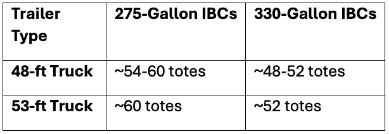
Why does this matter?
- More totes per load = lower transportation costs.
- Better stacking efficiency = fewer trips needed.
- Standard pallet size = easier loading and unloading.
Shipping Container Efficiency of IBC Totes
IBC totes are also a great fit for international shipping. Here’s how many can fit in a standard container:

This means more product moved per shipment, reducing costs and improving supply chain efficiency.
Why Shape Matters: The Power of Cubic Efficiency
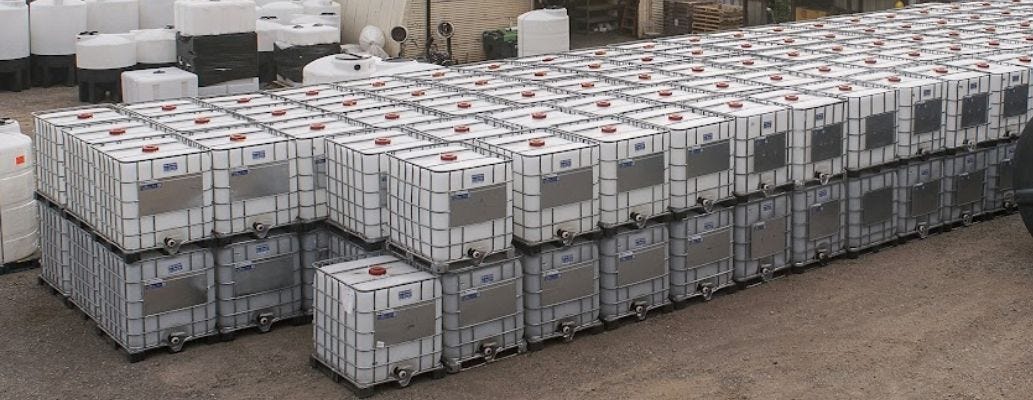
Unlike round drums, IBC totes are cube-shaped, allowing them to fit snugly together without wasted space. This design provides:
- Zero wasted space—Cylindrical drums leave empty gaps, while IBC totes use 90-95% of available space.
- Stable stacking—Flat surfaces distribute weight evenly, preventing shifting.
For example, a 48-ft truck can carry up to 60 IBC totes, holding five times more liquid per unit of floor space than drums. That translates to fewer trips, lower fuel costs, and faster deliveries.
Choosing the Right IBC Tote for Your Liquid
Not all liquids are the same, so choosing the right IBC tote depends on regulations, viscosity, and material compatibility.
Water Transportation (Drinking & Industrial Use)
- 275-gallon food-grade IBC totes are common.
- FDA-approved polyethylene ensures safe potable water storage.
Chemical Transport (Hazardous & Non-Hazardous)
- Steel IBCs or specialized plastic totes are required for certain chemicals.
- UN/DOT compliance ensures safe transportation.
Food-Grade Liquids (Oils, Syrups, Juices)
- Smooth, food-safe interiors prevent contamination.
- Larger valves (3-inch) make thick liquids easier to dispense.
Diesel Exhaust Fluid (DEF) Transport
- ISO 22241-certified totes prevent contamination and ensure DEF quality.
Final Thoughts: Why IBC Totes Are the Best Choice for Liquid Transport
From maximizing truck space to ensuring regulatory compliance, IBC totes offer unmatched efficiency for bulk liquid transportation. Their standardized dimensions, stackability, and palletized design make them a top choice across industries. That said, IBC totes require proper care and maintenance, including thorough cleaning and sanitizing especially for food-grade IBC totes.
So, why deal with inefficient, outdated methods when you could actually be saving on ROI?
- Smart Design: Choose between 275-gallon and 330-gallon sizes to fit your needs.
- Built for Performance: Durable materials, corrosion-resistant options, and secure stacking.
- Cost-Saving & Sustainable: Reduce trips, cut costs, and support eco-friendly reuse.
Looking for the right IBC tote for your business?
Get in touch for a free quote!
Browse our selection of IBC totes for food, chemicals, agriculture, and more!
Upgrade your liquid transport game—where every inch (and dollar) counts.