
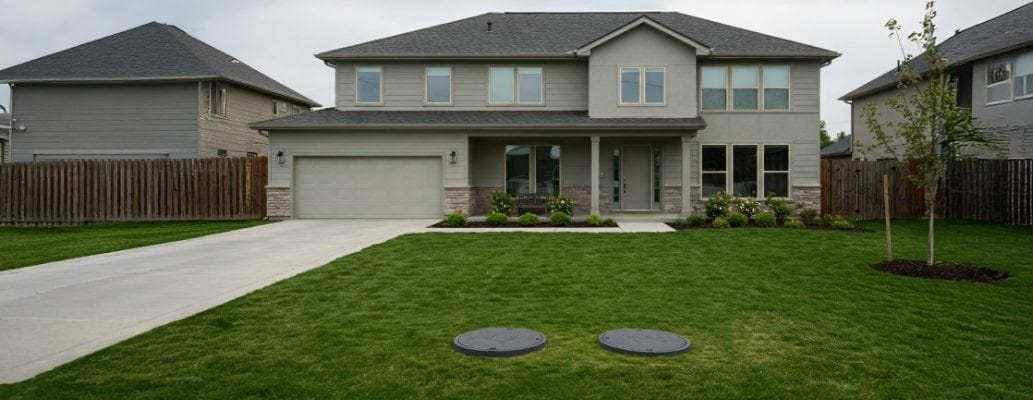
A New Era for Onsite Wastewater Treatment and Management
With over 21% of U.S. households relying on septic systems, onsite wastewater treatment plays a crucial role in managing residential and commercial wastewater. These decentralized systems collectively process over 4 billion gallons of wastewater every day, offering a practical alternative to traditional municipal sewer networks—especially in rural and suburban communities.
However, aging infrastructure, evolving environmental regulations, and increasing population demands are driving a new wave of innovation in wastewater management. Homeowners today need solutions that are not only efficient but also sustainable, durable, and easy to maintain.
Challenges in Traditional Septic Systems
While septic tanks have been a staple in wastewater management for decades, older designs—such as concrete tanks and cesspools—come with notable drawbacks:
- Risk of groundwater contamination due to leaks and system failures.
- Poor performance in high water table areas or regions with slow-draining soils.
- Structural deterioration over time, leading to costly repairs or replacements.
To address these concerns, modern septic solutions have evolved to provide homeowners with better efficiency, reduced maintenance, and environmentally responsible options. Below, we explore key innovations that are revolutionizing onsite wastewater treatment.
Breakthrough Septic Tank Materials: Strength, Longevity & Eco-Friendliness
Why Traditional Septic Tanks Fall Short
For decades, concrete septic tanks were the industry standard. While strong, they are heavy, prone to cracking over time, and vulnerable to soil movement and freeze-thaw cycles. Cesspools—older systems that discharge untreated effluent directly into the ground—pose even greater risks, leading to contamination and regulatory bans in many states.
As a result, newer materials like polyethylene (HDPE) and fiberglass are transforming septic tank durability, cost-effectiveness, and sustainability.
The Advantages of Polyethylene (HDPE) Septic Tanks
High-density polyethylene (HDPE) is now the go-to material for residential and commercial septic tanks. Here’s why:
- Lightweight & Easy Installation – Unlike heavy concrete tanks, HDPE units are easy to transport and install, reducing labor and equipment costs.
- Crack & Leak Resistance – Polyethylene’s flexibility allows it to withstand soil shifts, ground pressure, and extreme weather without cracking.
- Corrosion & Chemical Resistance – Unlike concrete, which can degrade from acidic wastewater, HDPE resists corrosion and chemical breakdown.
- Seamless, Leak-Proof Construction – Many HDPE tanks are rotomolded in a single piece, eliminating weak points that could lead to leaks.
- Low Maintenance & Long Lifespan – With a lifespan exceeding 30 years, polyethylene tanks require minimal upkeep.
- Eco-Friendly & Sustainable – HDPE is 100% recyclable and has a lower carbon footprint than traditional materials.
Fiberglass Septic Tanks: An Alternative to HDPE
Fiberglass tanks also offer a lightweight and corrosion-resistant alternative to concrete. However, they require careful handling during installation to prevent cracking. While both fiberglass and HDPE are excellent choices, polyethylene remains the most cost-effective and impact-resistant option for most residential applications.
Which Type of Septic Tank Is Best for Your Home?
If you’re considering upgrading or installing a new system, polyethylene septic tanks provide superior longevity, cost savings, and environmental benefits.
Low-Profile Septic Tanks: Modern Design for Seamless Integration
Gone are the days of unsightly mounds in your yard. Low-profile septic tanks are designed for discreet installation, blending seamlessly into your landscape while maintaining high wastewater treatment efficiency.
- Compact footprint allows for placement in yards with limited space.
- Shallow burial depth reduces excavation costs and makes installation easier.
- Durable yet lightweight design ensures long-term reliability without the hassle of traditional bulky tanks.
Many of today’s low-profile models, including IAPMO-approved Norwesco septic tanks, are engineered to offer optimal wastewater treatment without disrupting your property’s aesthetics.
Pre-Plumbed Septic Tanks: Faster, Hassle-Free Installation
Traditional septic tank installations often involve extensive plumbing work, increasing labor time and costs. However, pre-plumbed septic tanks, including Norwesco Bruiser tanks, simplify this process by including pre-installed PVC tees and adapters, making setup significantly quicker and more efficient.
- Reduces on-site plumbing work
- Speeds up installation time
- Minimizes errors or leaks from manual plumbing adjustments
If you’re looking for a fast, hassle-free setup, consider preplumbed septic tank models for a streamlined installation experience.
Leaching Chambers: Enhanced Effluent Distribution for Superior Drain Field Performance
A well-functioning drain field is critical to preventing septic system failures. Traditional gravel-based drain fields, while effective, can suffer from uneven effluent distribution and clogging.
Why Leaching Chambers Are a Game-Changer
Leaching chambers are a modern solution that improves wastewater dispersion and soil treatment.
- Enhanced Effluent Distribution – Open void spaces promote even liquid dispersion, reducing localized saturation.
- Increased Soil Contact – Effluent interacts more effectively with soil bacteria for superior filtration.
- Greater Storage Capacity – These chambers hold more wastewater, making them more adaptable to peak usage periods.
- Lightweight & Easy to Install – Unlike heavy gravel trenches, leaching chambers are easy to handle and install.
- Long-Term Durability – Made from high-density polyethylene (HDPE), these chambers resist corrosion, cracking, and root intrusion.
- Reduced Environmental Impact – Requires less land, conserving space while improving efficiency.
Investing in modern leaching chambers ensures better drain field longevity and overall septic system performance.
Septic Tanks with No Special Backfill: Effortless Installation
Traditional septic tanks often require special backfill materials for stability. However, some newer polyethylene tank designs eliminate this requirement, simplifying installation and reducing costs.
- No need for costly backfill materials
- Faster, easier installation process
- Minimized risk of improper backfill leading to system damage
For homeowners and contractors looking to save time and money, these no-special-backfill-required septic tanks offer an efficient alternative.
Two-Compartment Septic Tanks: Superior Wastewater Treatment Efficiency
Single-chamber septic tanks can struggle with effectively separating solids from liquid wastewater. This can lead to:
- Frequent pump-outs due to sludge accumulation.
- Drain field clogs, increasing the risk of system failure.
- Poor effluent quality, posing environmental hazards.
How Two-Compartment Septic Tanks Solve These Issues
Two-compartment septic tanks significantly improve wastewater treatment by providing a two-stage separation process:
✔ First Chamber: Primary Settling – Solids settle, allowing initial anaerobic digestion.
✔ Second Chamber: Further Clarification – Suspended particles settle further, resulting in cleaner effluent entering the drain field.
Key Design Enhancements for Optimal Performance
- Reinforced baffles prevent solids from escaping into the drain field.
- Sloped floors direct sludge to central points for easier pump-outs.
- Durable HDPE construction ensures longevity and corrosion resistance.
For homeowners seeking better efficiency and long-term cost savings, two-compartment septic tanks are the ideal choice.
Final Thoughts: The Future of Onsite Wastewater Management
As wastewater regulations tighten and environmental concerns grow, modern septic tank innovations are transforming how we manage household and commercial wastewater.
From advanced polyethylene tanks to efficient leaching chambers and two-compartment designs, today’s septic solutions offer unparalleled durability, efficiency, and sustainability.
Upgrade Your Septic System Today
At Tank Depot, we provide cutting-edge septic tank solutions designed to improve system performance while reducing environmental impact. Explore our premium selection of polyethylene septic tanks, leaching chambers, and innovative onsite wastewater treatment system today!
Contact our experts now to find the perfect septic system for your home or business!