

What Is Specific Gravity and Why Is It Important in Selecting A Liquid Storage Tank?
Every industry has its buzz words. In liquid storage, one of the terms thrown around is the specific gravity of liquids stored. How is this relevant in selecting a storage unit?
When it comes to storing liquids safely and efficiently, one key factor to understand is specific gravity (SG). But don’t worry—this isn’t as complex as it sounds!
In simple terms, SG is a way to measure how heavy a liquid is compared to water:
- SG above 1.0: The liquid is heavier than water (think sulfuric acid).
- SG below 1.0: The liquid is lighter than water (like ethanol or oil).
Understanding the specific gravity of fluids helps you choose the right tank to handle your liquid’s weight, density, and storage needs. A tank built for water might not work for heavy chemicals, and lighter liquids might need flexible solutions.
How Specific Gravity Works – A Quick Breakdown
Specific gravity measures a liquid’s density relative to water, which has an SG of 1.0. Here’s how it looks in real life:
- Ethanol: SG ~ 0.78 (lighter than water).
- Sulfuric Acid: SG ~ 1.84 (much heavier than water).
This tells us that ethanol needs less structural support, while sulfuric acid requires a tank made from reinforced materials that can handle the extra weight.
A Simple Formula of Determining Your Liquid’s Specific Gravity
You can calculate specific gravity with this equation:

Real-Life Example
Say you’re storing a fluid with a density of 850 kg/m³. To find its SG, you’d divide that by the density of water (1,000 kg/m³): 850 ÷ 1,000 = 0.85
This means your liquid is lighter than water, and while it might not need a reinforced tank, other factors like temperature or chemical reactivity could still influence your choice.
In other words, the specific gravity helps you determine how your liquid interacts with storage materials and ensures your tank can safely hold the weight.
Temperature and Concentration: Why They Matter
Temperature Affects Density
Liquids expand when heated, which lowers their density and SG. For temperature-sensitive fluids like biodiesel or DEF (Diesel Exhaust Fluid), this means you may need tanks designed to handle fluctuations without compromising safety.
Concentration Impacts Weight
The more concentrated a liquid, the denser it becomes. For instance:
- A 50% solution of acetic acid has a higher SG (06) than a 10% solution (1.01).
Heavier, denser solutions require stronger, reinforced tanks.
Why Specific Gravity Is Crucial for Storage Tank Selection
Choosing the wrong tank can lead to leaks, spills, or worse. Here’s why the specific gravity of fluids is such a big deal:
Tank Materials Must Match the Liquid
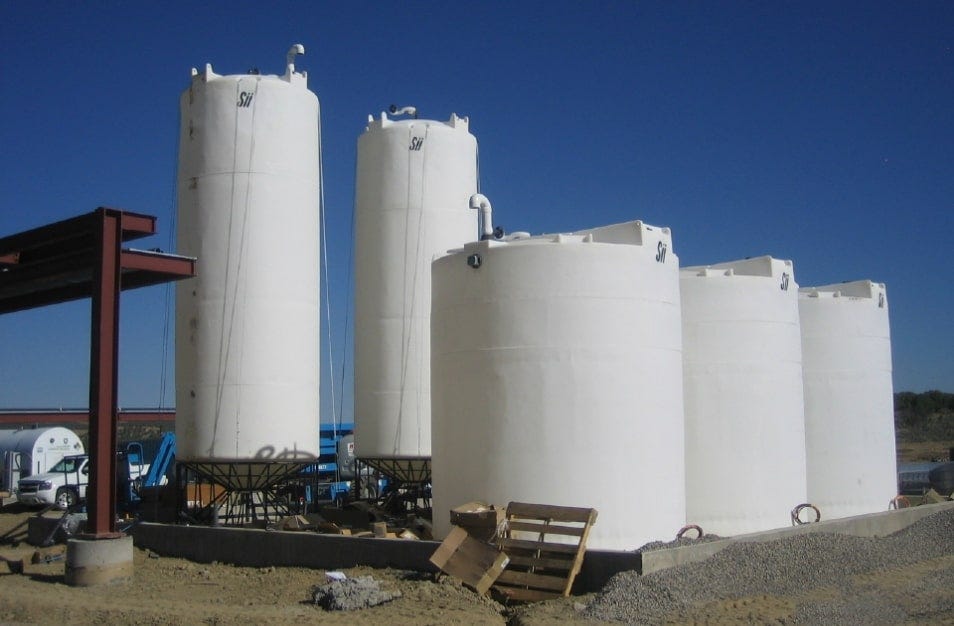
High-density liquids like sulfuric acid need tanks made from durable materials like High-Density Linear Polyethylene (HDLPE) or Cross-Linked Polyethylene (XLPE). These materials resist corrosion and withstand the weight of dense fluids.
Structural Integrity Matters
Heavy fluids put stress on tank walls and bases. Reinforced designs ensure that tanks can safely handle this pressure without risk of failure.
Safety and Compliance
Tanks designed for high-SG liquids must meet safety standards, such as those set by ASTM, to prevent environmental damage or workplace accidents.
How to Measure the Specific Gravity of a Fluid
Here are some common tools that make measuring the specific gravity a breeze:

Hydrometers
These simple tools float in the liquid and give you a quick SG reading—perfect for an initial check.

Pycnometers
Great for lab settings, these measure SG with high accuracy by weighing a specific volume of liquid.

Digital Meters
Ideal for professionals, these devices provide precise SG readings and account for temperature changes.
Choosing the Right Tank: Tips for Success
When shopping for a storage tank, here’s how to ensure you’re making the best choice:
- Match the Tank to the Liquid: Use tanks made from materials compatible with your liquid’s SG and chemical properties. For example, sulfuric acid requires corrosion-resistant materials like XLPE.
- Go Beyond the Minimum SG Rating: Always choose a tank rated above your liquid’s SG. For instance, a fluid with an SG of 1.2 may require a tank rated for 1.9 SG or higher.
- Consider Temperature and Concentration: For temperature-sensitive liquids, insulated or double-walled tanks are ideal. Similarly, dense or concentrated liquids may need reinforced designs.
- Inspect Tanks Regularly: Over time, dense liquids can stress tank materials. Regular inspections help catch early signs of wear or damage, ensuring safe, long-term storage.
For a guided approach, our chemical storage tank specialists are ready for a free consultation to discuss your unique project requirements.
Why Plastic Mart Is Your Go-To for Storage Tanks
At Plastic Mart, we know that choosing the right tank can feel overwhelming. That’s why we make the process simple, quick, and hassle-free. Here’s what sets us apart:
- Wide Selection: From lightweight tanks for water to heavy-duty options for industrial chemicals, we have it all.
- Expert Advice: Not sure where to start? Our friendly team is here to guide you every step of the way.
- Convenient Shopping: Find exactly what you need online—no complicated consultations required.
Simplify Your Storage with Plastic Mart
Specific gravity doesn’t have to be a complicated subject. With the right tank, you can safely store any liquid—light or heavy, simple or complex. And we are here to make that process a breeze. Reach out now.
Check out our collection of high-quality plastic tanks today, and let us help you find the perfect solution for your needs!


